The Toledo Museum of Art is one of the most renowned museums in the country. Founded in 1901 by Edmund Drummond Libbey, the museum’s campus spans 40 acres and its collection includes over 30,000 items. TMA’s antiquities collection includes Etruscan, Greek, Persian, Sumerian, Roman, and other artifacts from 3000 BCE to 1200 CE.
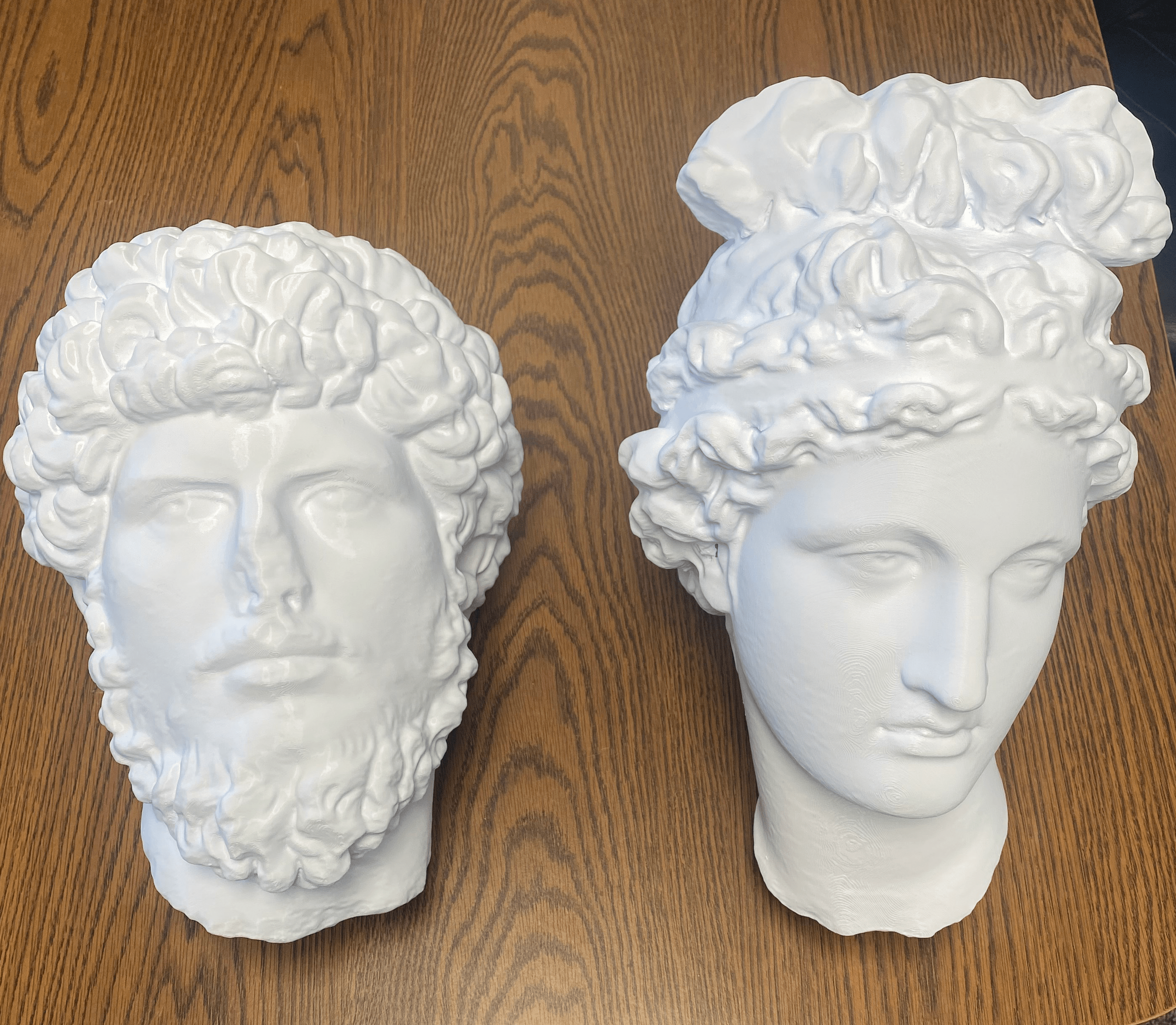
Among the ancient Roman objects on display in Classic Court are two heads carved out of fine Dokimeion marble. The first head, dated to c. 161-169 CE, depicts the Roman Emperor Lucius Verus. Lucius Verus, held power jointly with his adopted and more famous brother, Marcus Aurelius, from 161 to 169 CE. The second head represents an idealized female figure, likely the Roman goddess of love, Venus; it was made in the late second or early third century CE.
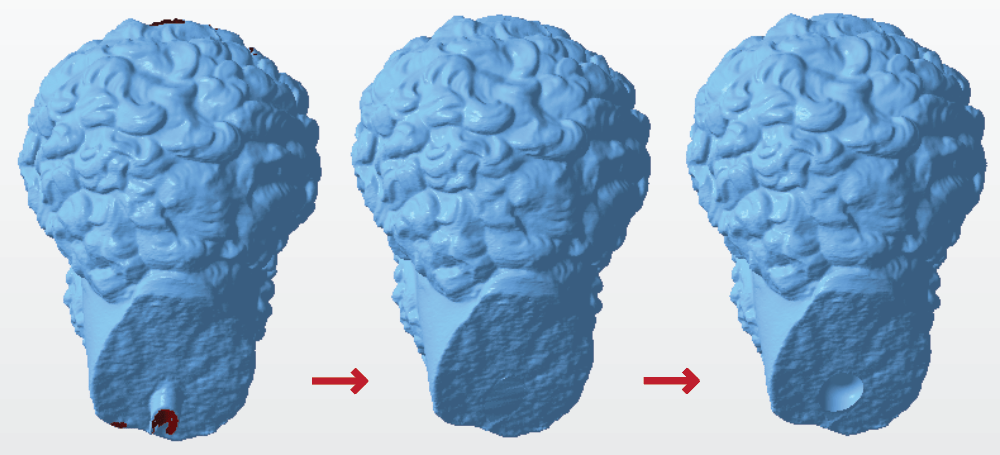
At the time of acquisition, both heads were mounted on immovable metal pins inserted into the break surfaces of the neck. As part of a research project, TMA staff needed to examine these break surfaces, but the pins were in the way and could not be removed. The conventional method, involving the creation of a plaster cast, was too invasive, and TMA instead commissioned Thingsmiths to create a 3D scan of each head,digitally remove the mounting rod, and 3D print a replica that would allow for an examination of the object’s underside.
Thingsmiths used an Artec Eva to scan these marble carvings on-site at the museum. The Artec scanner and latest software offer high-fidelity topographical and color data collection. Following scanning, the files are modified and prepared for 3D printing. Each head took around five days to fully print and weighed ~3kg.